Sources checked 30 October 2026 · Check your date with the provider
Some links are affiliate links. We may earn a commission on qualifying bookings at no extra cost to you. This does not determine your price or guarantee availability.
Build town time around the river appointment
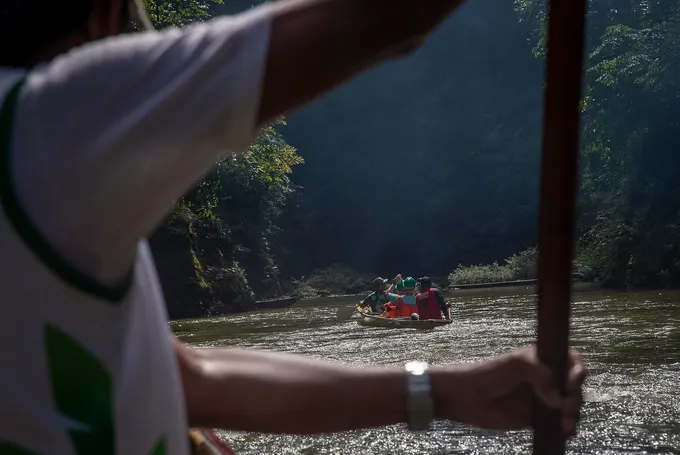
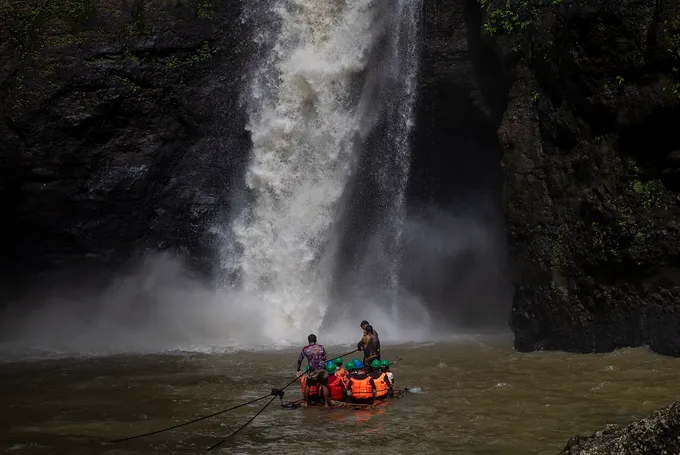
If the waterfall is your main reason for visiting, place the confirmed registration and boarding arrangement first. A town wander works better after you have changed into dry clothes, or on the afternoon before a morning activity. Trying to fit sightseeing between arrival and a tightly timed departure can turn a compact visit into an unnecessary rush.
An overnight base gives you another chance to enjoy a meal or look at heritage details without carrying wet equipment everywhere. Choose accommodation for its actual address and facilities rather than assuming that every property labelled Pagsanjan has a launch outside its door. Our Pagsanjan and Lumban accommodation guide explains the questions to ask.
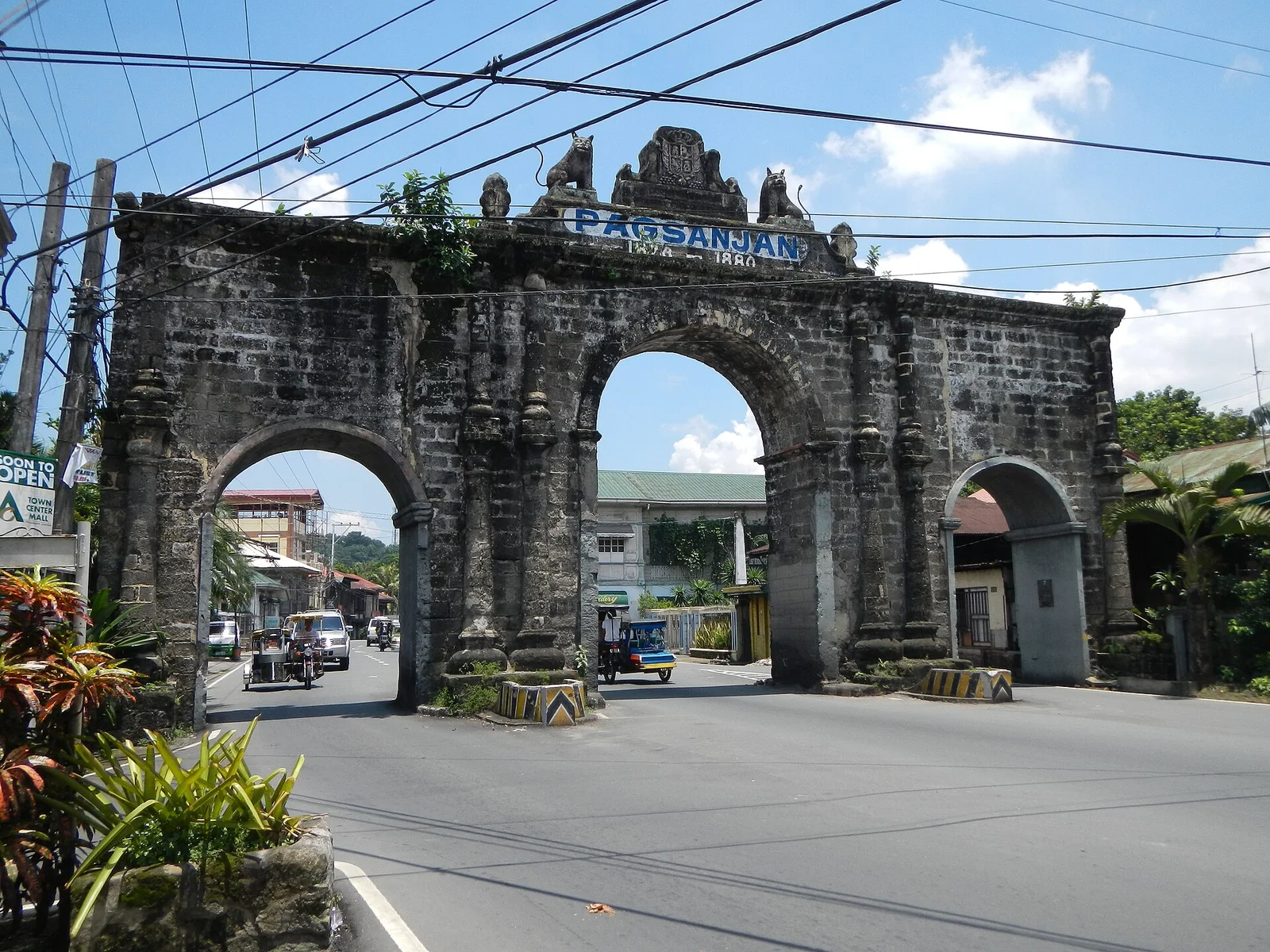
Read the town gateway carefully
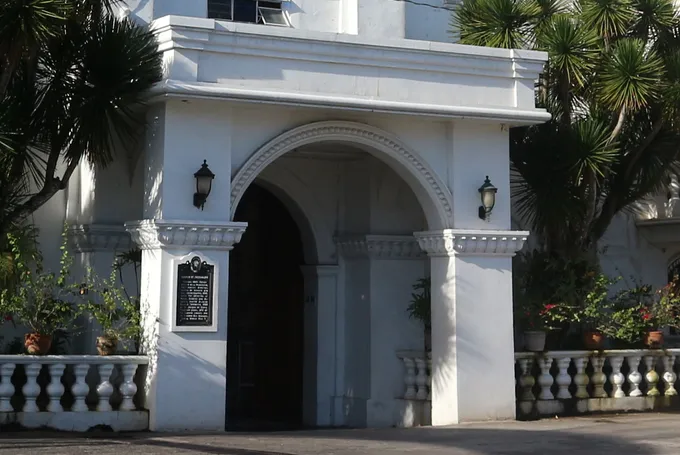
The National Historical Commission records Puerta Real's construction from 1878 to 1880. Built using adobe and lime, the gateway marked the entrance along Calle Real and has undergone later restoration. It is a useful first stop because it makes the town's history visible in the street, rather than treating heritage as an optional footnote to the waterfall.
Look for the official marker and notice the relationship between the arch and the road around it. Choose a position where you can stop without blocking pedestrians or stepping into traffic for a photograph. Do not rely on romantic construction stories repeated online: the verified marker is sufficient to explain the gateway's materials, date and role.
Understand the church as a changing building
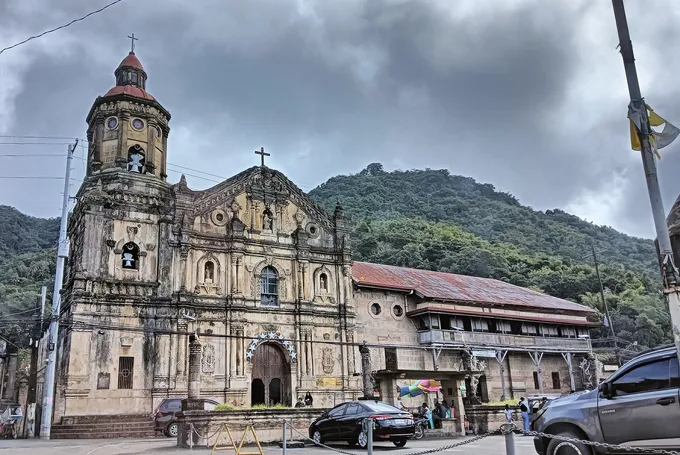
The historical marker for the Church of Pagsanjan records a foundation in 1687, an early bamboo-and-nipa structure and reconstruction in 1690. It also records later improvements and wartime damage. That history is richer than calling the present building simply a seventeenth-century church, which can imply that all the visible fabric is original.
Treat it as a place of worship first. Check whether services or a private ceremony are taking place before entering, dress appropriately and ask before photographing people or restricted interiors. No fixed visiting timetable is asserted here. If you enjoy tracing how Laguna churches differ, Paete and Pakil make a thoughtful separate cultural outing.
Look beyond a building's first construction date
Pagsanjan's municipal building has served several purposes. Its official marker places its origins in the middle of the nineteenth century and records military, educational and civic use. It was destroyed in March 1945, rebuilt from 1951 and completed in 1955. The sequence helps explain why a historic civic site can include substantial twentieth-century fabric.
You do not need access to every room to appreciate that story. Read the marker and observe the exterior while allowing normal government work to continue. An open entrance is not an invitation to wander through offices. Pairing the building with the gateway and church offers a focused introduction without inventing a museum-style admission experience.
Choose a meal that fits the town visit
The Tourism Promotions Board has included Calle Arco, an ancestral-home restaurant serving Filipino home-style dishes, in a Laguna cultural itinerary. That makes it a grounded possibility for a meal with a sense of place. It does not establish today's menu, table availability, opening time or the inclusion of lunch in your boat booking.
If traveling with children, allergies or dietary requirements, ask about the actual dishes rather than assuming a set lunch can be adapted at short notice. A riverside setting and a town-center restaurant answer different preferences; choose according to where you will be after changing. Our food guide explains useful regional stops without turning every snack into a claimed local invention.
Plan a small route, then use local transport when needed
A local hotel describes Pagsanjan town as walkable and notes jeepney and tricycle connections. That does not mean every landing station, hotel and restaurant belongs to one comfortable walking loop. Heat, rain, luggage, pavement conditions and the exact addresses can make a short ride worthwhile, especially after a wet activity.
Save your accommodation and meeting-point details before setting out. For a local ride, agree on the destination and total fare before departure and ask your host about a reliable return arrangement if staying outside the center. When arriving by bus, remember that reaching the Santa Cruz area is still different from arriving at the correct boat station; see transport from Manila.
Use the town as a base, not a checklist race
Pagsanjan can support more than one day of exploration, but neighboring places deserve their own purpose. Lumban offers embroidery and church history; Santa Cruz adds food traditions; Paete and Pakil offer another heritage-and-craft pairing. A lake-resort stay around Caliraya is a different style of trip with different arrival logistics.
Choose one neighboring cluster that interests your group instead of trying to collect every Laguna destination after the canoe. Confirm shop visits, meals and transport as separate arrangements. The Laguna itinerary guide shows how to build a coherent route while leaving room for the river's conditions, a slower lunch or a change of plan.
Questions before you go
Is Pagsanjan town the same as the waterfall location?
No. The classic river outing is associated with Pagsanjan town, while the waterfall is in Cavinti. Confirm the exact launch or entrance when arranging transport.
Can I see the heritage stops without a boat trip?
Yes, they have their own historical interest. Check current local conditions and access, and respect worship and government activity rather than expecting a packaged visitor attraction.
Are the oldest dates the ages of today's buildings?
Not necessarily. Official markers record damage, rebuilding and restoration. Foundation dates and surviving building fabric should be described separately.
Is an overnight stay worthwhile?
It can be if you want a more relaxed river departure and time for meals or nearby towns. Choose it for that flexibility, not as a promise of better weather.
Sources & editorial notes
We use official tourism and heritage records, operator information and accommodation listings. The notes below list each publisher once; the full bibliography retains individual sources. A source check is not a live operating-status check.
- National Historical Commission of the Philippines ↗
- Tourism Promotions Board Philippines ↗
- Casa Marina Bed and Breakfast ↗