Sources checked 30 October 2026 · Check your date with the provider
Some links are affiliate links. We may earn a commission on qualifying bookings at no extra cost to you. This does not determine your price or guarantee availability.
Look beyond the age label
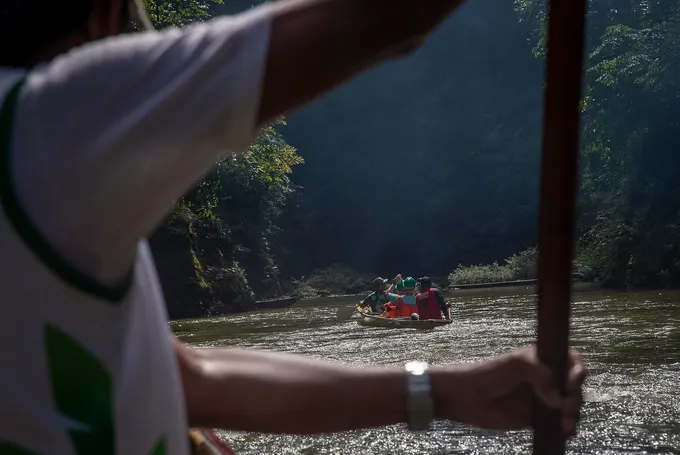
Consider the road journey, waiting, boarding, sitting through the river stage and changing afterwards. Someone comfortable with one part may struggle with another. Discuss these stages together instead of judging by age alone, whether travelling with children or adults with different mobility needs.
Ask your chosen operator for its current age, size, health and participation restrictions before booking. A general website description cannot override the requirements for a specific departure. If a listing only says the activity is suitable for families, request details about your own group rather than interpreting that phrase as a guarantee of equipment, assistance or access.
Describe the assistance you need precisely
Useful questions are concrete: How do passengers get from the waiting area into the canoe? Is there a step down? What supports are available? How low is the seat, and can the traveller maintain the required position? Ask whether a photograph of the boarding area or a description of the seating can be provided, while remembering that the exact arrangement may vary.
Tell the operator if someone uses a walking aid or wheelchair and ask what happens to it during the activity. Do not assume equipment can travel in the canoe or that staff can provide a lift. Agreement about a comfortable road vehicle is separate from access to the river activity. Record the answers in the booking conversation so the local team receives the same information.
Confirm child equipment and supervision
Ask about child-sized protective equipment and how suitability is checked for your child's actual size. The published Abraham canoe trip requires a life vest and helmet; that is a useful prompt to ask your own provider about its rules. An adult-size item available on the day is not an adequate answer to a question about a child's fit.
Explain the experience to children without promising a particular thrill or waterfall activity. Discuss following the boatmen's directions, leaving equipment on and keeping belongings packed away. Confirm the seating and adult-supervision arrangement for your family before departure. If a child becomes frightened, agree how to communicate with the crew; do not promise an immediate exit at any point along a gorge journey.
Make water exposure a choice discussed beforehand
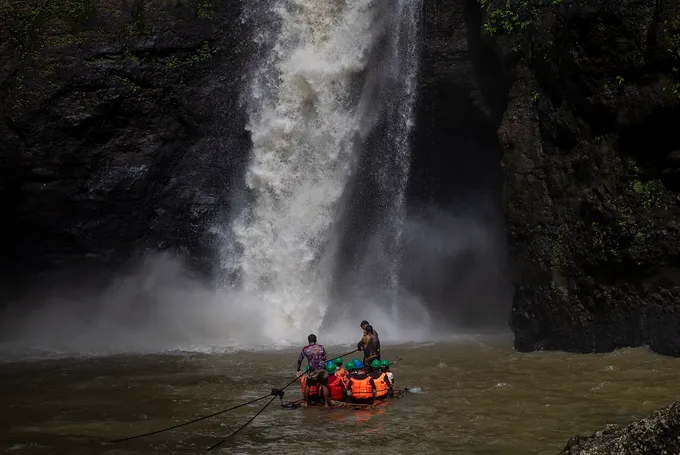
Separate participation in the canoe journey from the raft stage at the falls. Ask whether declining the raft is possible, where a non-participant would wait, and who would remain with a child or someone requiring assistance. An optional activity is only a useful option when the waiting and reunion arrangements are clear.
Prepare for spray, wet clothing and the sensory experience of a waterfall rather than assuming everyone wants to go beneath it. Never promise swimming at the main falls: provider descriptions can be inconsistent, and local instructions take priority. Ask what is permitted for the specific departure and plan enjoyment around the scenery and journey, not a guaranteed swim.
The Cavinti route is not an automatic accessibility alternative
The land-side approach described from Pueblo El Salvador involves steep or vertical ladder sections, assisted equipment and a climb back out. It should not be recommended simply because someone cannot manage a canoe. Whether the route is currently available, and what assistance is possible, must be confirmed by the responsible provider for the intended date.
For either approach, break the route into actual tasks and compare them with the traveller's needs. Avoid vague assurances such as 'staff will help' unless the provider explains how. If a required stage cannot be accommodated, choose another activity rather than relying on improvisation at the entrance. Our route comparison explains why arrival and return both matter.
Plan the parts that keep the group comfortable
Ask where toilets, changing space, lunch and any waiting area fit into the schedule. Facilities mentioned by one operator apply to that operator's arrangements, not every landing. Advise about dietary needs before booking and confirm what can realistically be provided. Bring dry clothing and arrange food or drink breaks with the tour team rather than assuming they occur whenever requested.
A private transfer can simplify pickup and group communication, but it does not create unrestricted timing or change river decisions. If travellers have different priorities, arrange a separate town-based plan with an agreed responsible adult, transport and reunion point. Consider a slower overnight itinerary when a long return drive would make the day unnecessarily difficult.
| Need | Question to settle before payment |
|---|---|
| Assisted boarding | What exact help and boarding arrangement are available? |
| Child equipment | Are appropriate sizes available for this child? |
| Declining the raft | Where can the person wait, and with whom? |
| Rest or changing space | Which facilities are part of this departure base? |
| Separate itinerary | Who handles supervision, transport and reunion? |
Reconfirm the plan with the people running the trip
Before travelling, send a concise reminder of agreed assistance, equipment, pickup and activities your group will skip. Confirm the contact for changed conditions and save an offline copy. Specific advance communication is more useful than an accessibility symbol the local crew has never seen.
Recheck weather information and the provider's operating decision, especially when your group has limited flexibility. Agree the payment and transport arrangements if cancelled. Use our booking checklist and packing guide to prepare a day suited to the people travelling, with a workable alternative when needed.
Questions before you go
What is the minimum age for Pagsanjan Falls?
Do not apply one age rule to every operator and route. Check the restriction for your exact booking, along with equipment size, seating and supervision. A child meeting an age threshold may still need further suitability checks.
Is the canoe trip wheelchair accessible?
Do not assume step-free or wheelchair access. Ask the provider to describe the complete boarding and seating arrangement, assistance and mobility-aid storage. A transfer vehicle alone does not establish access to the canoe stage.
Can an older traveller enjoy the trip?
Age alone is not the useful test. Discuss boarding, low seating, balance, water exposure and the length of the overall day. The operator must confirm its restrictions and whether the traveller's specific needs can be met.
Can part of the family wait in town?
Arrange a separate plan with transport, supervision, contact details and an agreed meeting point. The operator does not automatically supervise non-participants.
Sources & editorial notes
We use official tourism and heritage records, operator information and accommodation listings. The notes below list each publisher once; the full bibliography retains individual sources. A source check is not a live operating-status check.
View the source bibliography →